

If you’re in crisis or thinking about harming yourself, you’re not alone and help is available right now. In the US & Canada call or text 988. In the UK & Ireland call 116 123 (Samaritans). Elsewhere, contact your local emergency services — Get Help Now lists lines by country.
Prefer to listen? This article is also an episode of the Bipolar Clarity Podcast.Listen to episode 22 →
The essentials in 30 seconds
- It’s almost never one or the other. It’s usually both at once — and once you see how, you get something more useful than a verdict. You get a test.
- An episode works like a broken sensor. It doesn’t reach in and rewrite someone’s values. It strips out the filter and floods them with total conviction, so the ugliest thought arrives feeling like a truth.
- Time. Does this show up only during episodes, or in the calm months too? That’s the difference between a state and a trait. Watch a full season, not a single storm.
- Pattern. Symptoms rise and fall with sleep and speed. They don’t aim. People aim.
- Repair. Everyone does damage in an episode — that isn’t the test. The test is what they do once they can see again. An illness can explain a behaviour; it can’t be the whole excuse for the pattern of a life.
- And if you are ever afraid, threatened, or being hurt, none of the questions on this page apply. Safety comes first.
Why the line won’t hold still
You’re looking for a line. On one side, the illness — and if it was the illness, you can forgive it. On the other side, them, who they really are underneath everything — and if it was that, you have some thinking to do.
Some days it’s obvious this isn’t them. Other days a quieter, more frightening thought creeps in: what if this is who they are, and the diagnosis was just the excuse I needed to stay?
You can’t keep loving someone from inside a question you can’t answer. So here’s the twist nobody tells you: it’s almost never one or the other. It’s usually both, at the same time. Understanding how both can be true is what turns an unanswerable question into three you can actually work with.
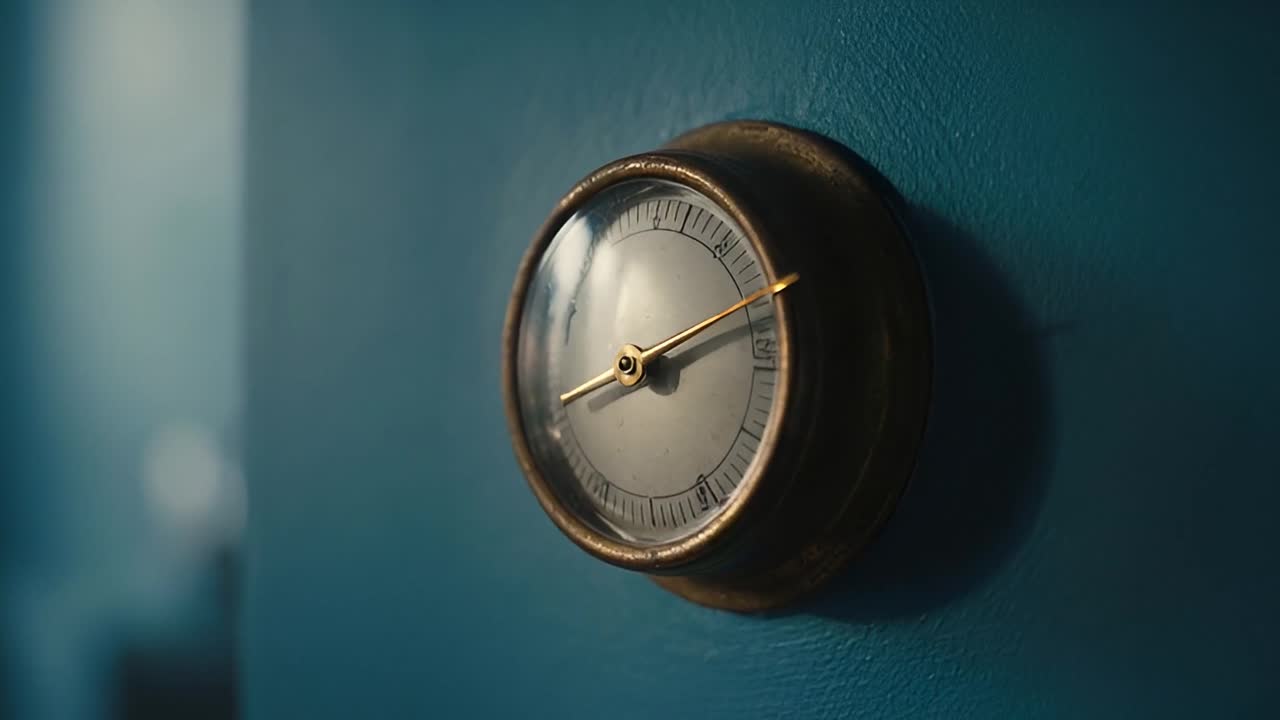
An episode is a broken sensor
Picture a thermostat. Its whole job is to read the room and hold it steady — a little cold, it nudges the heat up; a little warm, it eases off. That quiet, constant correcting is what a regulated mind does with mood all day long, and nobody notices it happening.
Now picture the thermostat breaking. Not the room changing — the sensor breaking. Suddenly the smallest draft reads as a deep freeze, a patch of sun reads as a heatwave, and the system slams the response to the floor or the ceiling. The room has barely changed. The reading has gone wild.
An episode is a broken sensor. It doesn’t swap out a person’s values or rewrite who they are. What it does is remove the filter — the pause between feeling something and acting on it, the small voice that says you don’t actually mean that, let it go. Take the filter away and two things flood in.
First, whatever is closest to the surface: old fears, old resentments, the three-a.m. thoughts everyone has and nobody says. And second — the cruel part — total conviction. In an episode, the ugliest thing a person can think doesn’t arrive as a passing thought to be dismissed. It arrives feeling like a truth they’ve finally been brave enough to say.
That’s why it lands like a blow. It wasn’t said carelessly. It was said with certainty.
Why cruelty in an episode can feel like honesty
Here’s the part that’s almost impossible to picture from the outside. René, who writes this channel and has lived bipolar disorder from the inside for more than twenty years, describes it like this: when the filter drops, you don’t feel unwell. That’s the trap. You feel clear — as if the fog everyone else is living in has finally lifted for you, and you’re seeing the relationship, and the person in front of you, with a terrible new honesty.
The thing you say doesn’t feel like a choice to be cruel. It feels like something true you’d been too polite to admit. And then the weather passes, the clarity turns out to have been the symptom, and you’re left holding words you’d give almost anything to unsay.
So if you’re the one on the receiving end, please take this with you: the certainty in their voice was not a window into what they secretly believe about you. It was the sensor, reading a heatwave in a room that was only a little warm.
Which gets you an honest answer to the original question. The raw material was probably theirs — most of us keep a private drawer of unkind thoughts. But the conviction, the cruelty, the loss of the filter that normally keeps that drawer shut: that’s the broken sensor. Both true. Here’s how you tell, day to day, which one you’re looking at.
Question 1 — time: a state, or a trait?
Ask: does this show up only during episodes, or is it there in the calm stretches too?
A state is weather. It rolls in, it’s severe, and it rolls out — and when it’s gone the person is recognisably themselves again, often horrified at what the weather did.
A trait is climate. It’s simply there, in the good months and the bad, at the calm dinner and the tense one.
If the coldness, the contempt or the carelessness only appears when sleep is shredded and everything is speeding up, and genuinely lifts when things settle, you’re most likely watching a state. If it’s the steady temperature of the relationship no matter what the mood is doing, that’s a trait — and no diagnosis authored that.
The practical instruction: watch across a full season, not a single storm.
Question 2 — pattern: symptoms don’t aim
Does the behaviour move with the illness, or run on its own track?
Real symptoms have a tide. They rise and fall with sleep, with speed, with the mood cycle — you can almost feel them coupled to it. So watch what the behaviour is tied to. Does the harshness spike when sleep collapses and thoughts race, and ease when they rest? That tracks the illness.
But if it appears on a perfectly stable Tuesday, aimed carefully, chosen for maximum effect, timed to get a particular thing — that isn’t riding the tide. That’s steering. Symptoms don’t aim. People aim.
One clue helps here, and it needs handling with care. Sometimes a symptom is indiscriminate: the episode spills onto everyone in range — you, the kids, a colleague, a stranger on the phone — the same story everywhere, and it embarrasses them afterwards. And sometimes the harshness is oddly selective: warm and composed with the boss and the friends, saved sharply for you, behind a closed door, where there’s no witness and something to be gained. That second pattern can be a sign of steering.
Go gently with it, though, because closeness concentrates things too. The person nearest to someone in an episode often catches the worst of it simply for being nearest. You may be the lightning rod, not because you were chosen, but because you were closest. Treat it as one signal among three, never a verdict on its own. Weigh it next to time and repair.
Question 3 — repair: explanation, or excuse?
This is the one that matters most, and it’s where character actually shows itself.
Everyone does damage in an episode. That isn’t the test. The test is what they do when they can see again.
Do they turn and look at the wreck honestly — “I said that. It was mine to say, it wasn’t yours to carry, and I’m sorry”? Do they try to make it right, and take steps so the next storm has less to work with? That’s a person with an illness.
Or does the diagnosis get reached for like a laminated card — flashed to end the conversation, to make the harm disappear, to make you the unreasonable one for still being hurt? “I was manic, you can’t hold me to it,” used not as an explanation but as a permanent pass.
Here’s the line worth holding onto: an illness can explain a behaviour. It can never be a person’s whole excuse for the pattern of a life. An explanation looks backward to understand. An excuse looks forward, to keep the door open for the same thing again.
Put the three together and you get something clean. A state, plus decency in the repair, is a person you can build accountability with — the illness is real, and so is their ownership of it. A trait, or a state with no repair ever, is a different conversation, and you’re allowed to have it.
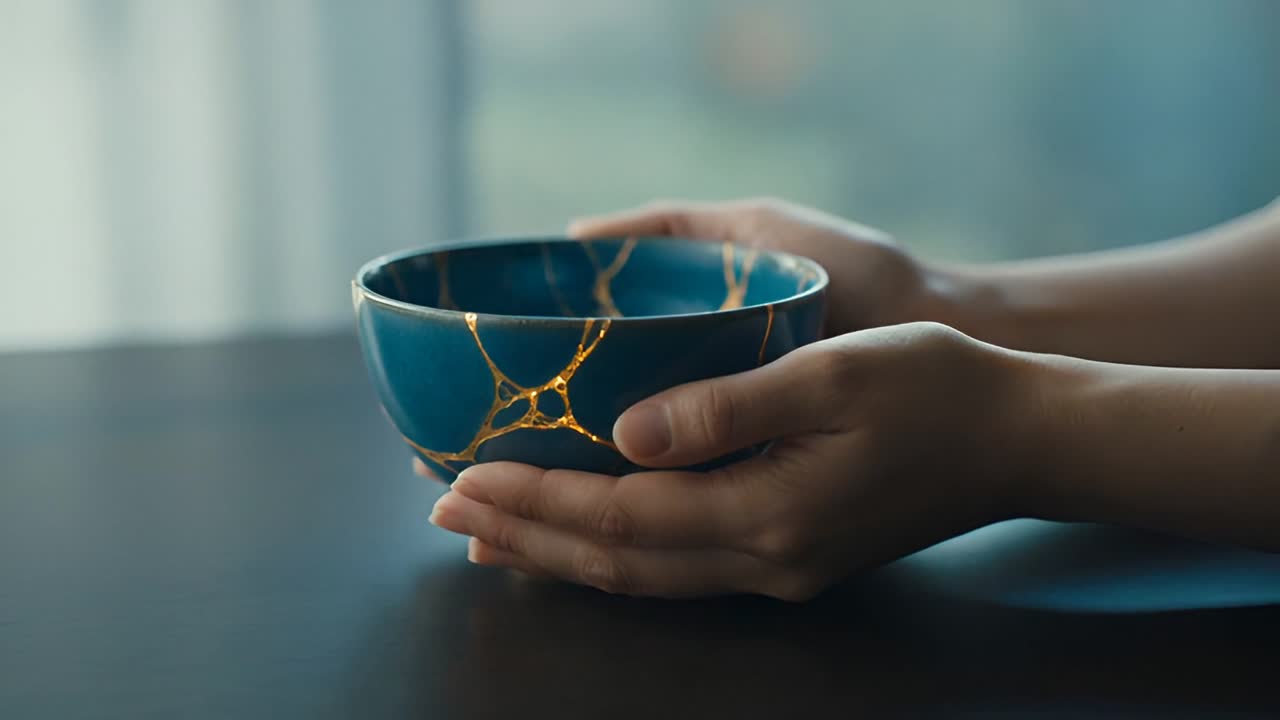
Compassion and a boundary are not opposites
This is the part some of you have been quietly carrying the whole way down the page.
Understanding is a gift you can choose to give. It’s a real kindness, and it can change everything for the person you love. But understanding why a wave knocked you down does not oblige you to stand in the same spot and get knocked down again. The healthiest love for someone with bipolar disorder holds both at once: the compassion and the limit.
And there is a line that none of this crosses. If you are ever afraid, if there are threats, if you are being hurt — that is not a symptom to be decoded, and safety comes first, before any question on this page. An illness explains; it does not authorise. In the United States and Canada you can call or text 988 for the Suicide & Crisis Lifeline, any time, free, and 911 in an emergency. Domestic-violence support in the United States is available on 1-800-799-7233. If you’re somewhere else, our crisis page lists lines by country. Put the number in your phone now — not because tonight is the night, but because the worst moment is the wrong moment to start searching.
The question underneath the question
So let’s answer the one that actually decides what you do next. It isn’t “do they love me?” — love was probably never the thing in doubt, and it isn’t reliable enough to steer by anyway.
The real question is smaller and far more answerable: what are they doing with the illness? Not feeling about it. Doing. Because that, you can see. Are they treating it as theirs to manage — the appointments kept, the sleep protected, the repair made when the sensor fails and does damage? Or are they handing you the diagnosis and asking you to carry it?
“Is it the bipolar or is it them” was always the wrong question, because the honest answer is both — and both leaves you stuck. “What are they doing with it” has a visible answer, and a visible answer is something you can finally act on.
The sensor can break. That’s the illness, and it’s nobody’s fault. What a person does about a sensor they know can break — whether they check it, and reach for you honestly after it fails — that part is theirs. And that’s the part worth watching.
One small step at a time, to help you protect your own energy while you support someone you love. Free.
Subscribe — it's freeBe as gentle with yourself as you’re trying to be with them. You’re carrying something real, too.
Sources
- Julie A. Fast & John Preston — Loving Someone with Bipolar Disorder
- David J. Miklowitz — The Bipolar Disorder Survival Guide
- Kay Redfield Jamison — An Unquiet Mind
- National Institute of Mental Health — Bipolar Disorder
- DBSA — Support for Friends and Family